
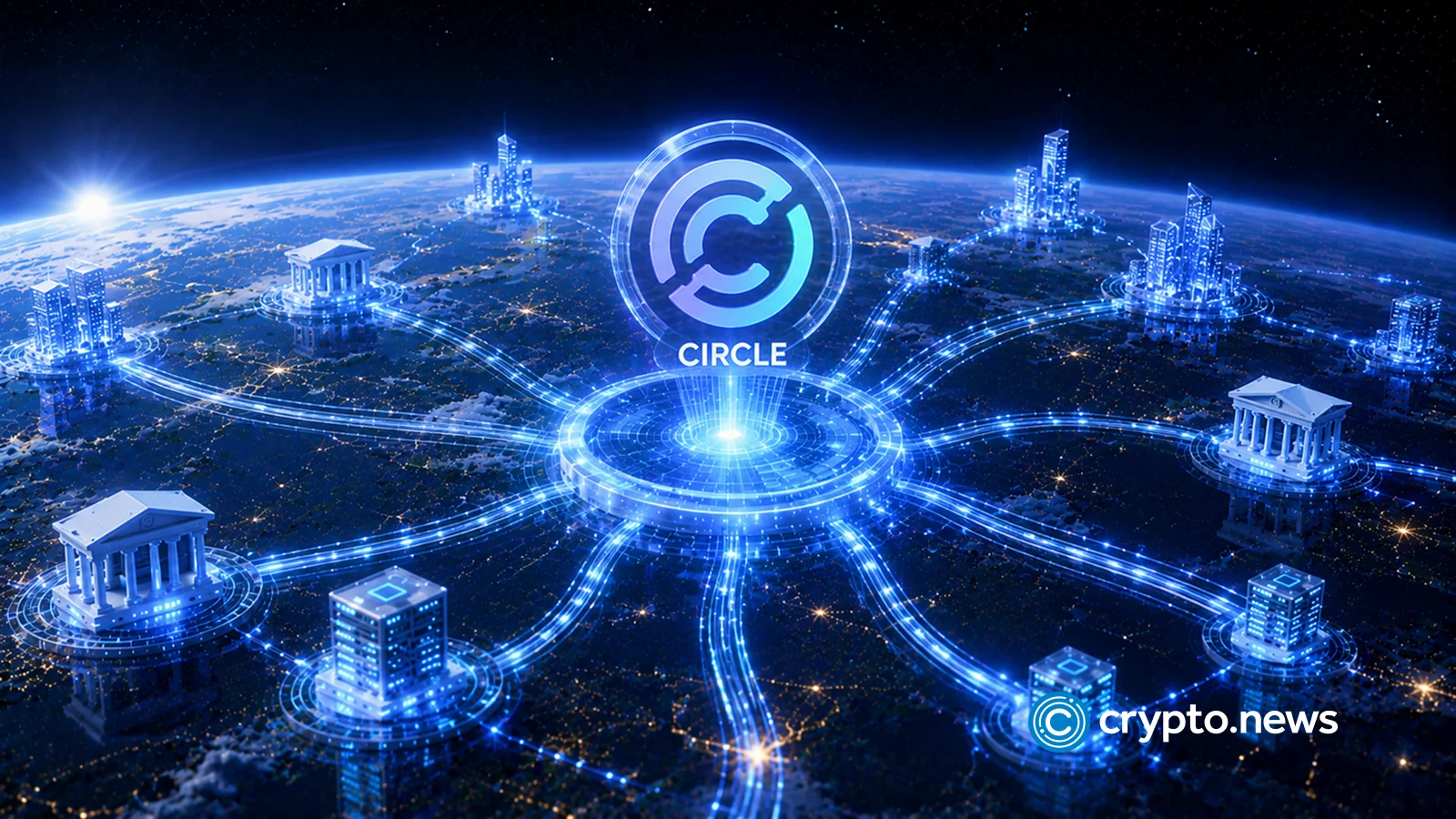
Circle has added upfront fee payments to CCTP Fast Transfer, allowing developers to quote and collect cross-chain USDC fees on the source network while preserving the amount delivered to recipients.
Summary
- CCTP developers can collect Fast Transfer and Forwarding Service fees before a USDC transfer.
- Fees can be paid in USDC or the source blockchain’s native gas token.
- Circle’s Quote API combines supported protocol fees into one signed, time-limited quote.
- Upfront fees require an EVM source chain, although transfers can still end on supported non-EVM networks.
CCTP collects transfer fees before burning USDC
Circle’s official developer documentation says the process begins when an application requests a signed fee quote and submits it with the USDC burn transaction on the source blockchain.
Under the previous payment method, protocol fees could be deducted from the USDC minted for the recipient on the destination network. A user sending a set amount could therefore receive less than the figure entered at the start of the transaction.
The prepaid model separates the transfer amount from the fee. Once the transaction has been submitted, a CCTP smart contract checks the signed quote, collects the payment, and passes the transaction to TokenMessengerV2, which completes the USDC burn.
Circle then verifies the transfer and mints the full stated amount on the destination chain. A person sending 100 USDC, for example, can arrange for the recipient to receive 100 USDC while paying the related protocol charge separately on the originating network.
Developers can use the setup for the Fast Transfer fee, the Forwarding Service fee, or both. Fast Transfer allows USDC to reach another chain before the source transaction reaches full finality, while the Forwarding Service can deliver funds and complete an action on the receiving network.
CCTP itself moves native USDC through a burn-and-mint system. The protocol destroys the tokens on the source chain before issuing the same amount on the destination chain, avoiding the wrapped assets commonly used by conventional bridges.
A cross-chain bridge explainer published by crypto.news in August described CCTP as the largest implementation of this issuer-controlled model. Unlike a general-purpose bridge, the system depends on Circle deploying and operating its infrastructure on every connected network.
Circle Quote API combines two CCTP fees
Through the CCTP Quote API, an application sends the transfer amount, the source and destination domain identifiers, the selected payment token, and the fees it wants priced.
A PRE_FINALITY request covers the Fast Transfer charge, while a FORWARD request covers the Forwarding Service. Developers can place both requests in the same API call rather than calculating and presenting the charges through separate systems.
The response contains the total fee, a breakdown for each service, the payment token, and a signed quote that must accompany the onchain transaction. Circle binds the quote to the specified transfer amount and destination, while Forwarding Service quotes also depend on the destination caller and hook data.
If a developer changes one of the bound values before submitting the transfer, the transaction reverts. Each quote also carries an expiry time or source-chain block limit, requiring the application to obtain a new price when the original offer expires.
Circle’s current documentation lists an approximate two-minute validity period for most supported networks, including Arbitrum, Avalanche, Base, Linea, OP Mainnet, Polygon PoS, Sonic, Unichain and World Chain. Ethereum quotes have an estimated window of two minutes and 30 seconds, although Circle notes that the duration can change.
The signed quote gives the application the exact protocol cost before the burn is submitted. Developers can therefore show the user the transfer amount, fee, and final amount in advance, without estimating separate charges that may be deducted after the USDC reaches another chain.
Users can pay CCTP fees in USDC or native tokens
For payment, developers can select either USDC or the native gas asset of the source blockchain. Native-token payment is the default option, with the quoted amount attached to the transaction as its native value.
Choosing USDC requires the application to enter the stablecoin’s source-chain address in the request. The user must then approve the TokenMessengerWithFees contract to spend both the USDC being transferred and the additional USDC needed for the fee.
Although both amounts come from the sender’s balance in that case, the contract handles them separately. Only the transfer amount enters CCTP’s burn-and-mint process, while the prepaid fee is collected before the burn.
Using a native token can leave the sender’s USDC balance unchanged apart from the amount selected for transfer. The option may suit wallets and applications that already hold gas assets on the originating chain, while USDC payment allows developers to keep the transaction costs denominated in dollars.
For Forwarding Service transactions, the updated contract can also create the required cctp-forward hook automatically when the developer requests a forwarding quote without supplying custom hook data. Applications using custom instructions must submit the same hook data used when obtaining the signed quote.
Circle’s example implementation transfers 10 USDC from Base Sepolia to Arc Testnet and prepays both service fees. The company said developers can follow the same process for eligible EVM source networks and any destination supported by the Forwarding Service.
EVM requirement excludes Solana as a source chain
Upfront fee quotes currently require the transfer to start on an EVM-compatible blockchain. Circle’s API documentation says the source domain must support prepaid fees and meet any additional conditions attached to the requested service.
Fast Transfer quotes are available only when the source blockchain supports faster-than-finality settlement. Similarly, an application can request a forwarding fee only when the destination works with Circle’s Forwarding Service.
Solana cannot act as the source network for an upfront-fee transaction under the current setup because it is not EVM-compatible. Applications can still send USDC to Solana when the selected route and destination service are supported.
CCTP’s network footprint has continued to grow as Circle adds native USDC to more chains. In August, Circle launched CCTP on X Layer, taking the protocol to 26 blockchains while native USDC was available across 36 networks.
For institutional users, Circle connected Gateway with Fireblocks in July, allowing customers to manage a unified USDC balance across supported chains through Fireblocks’ controls, approval systems and transaction records.
American users remain subject to the terms of the platforms and applications through which they access CCTP. Circle’s USDC terms state that its U.S.-issued stablecoin is treated as stored value or prepaid access under applicable state money-transmission laws, while third-party support for USDC does not constitute Circle’s approval of that service.